 Skip to content


The Renters’ Rights Act is bringing major changes to private renting in England. One of the first practical jobs for landlords is simple but important, providing the official Renters’ Rights Act Information Sheet to the right tenants by the right deadline. This guide explains who needs to receive it, how to serve it correctly, and what else landlords should prepare for.
This is general information only, not legal advice. For complex cases, check the latest GOV.UK guidance or take independent legal advice.
What is the Renters’ Rights Act Information Sheet?
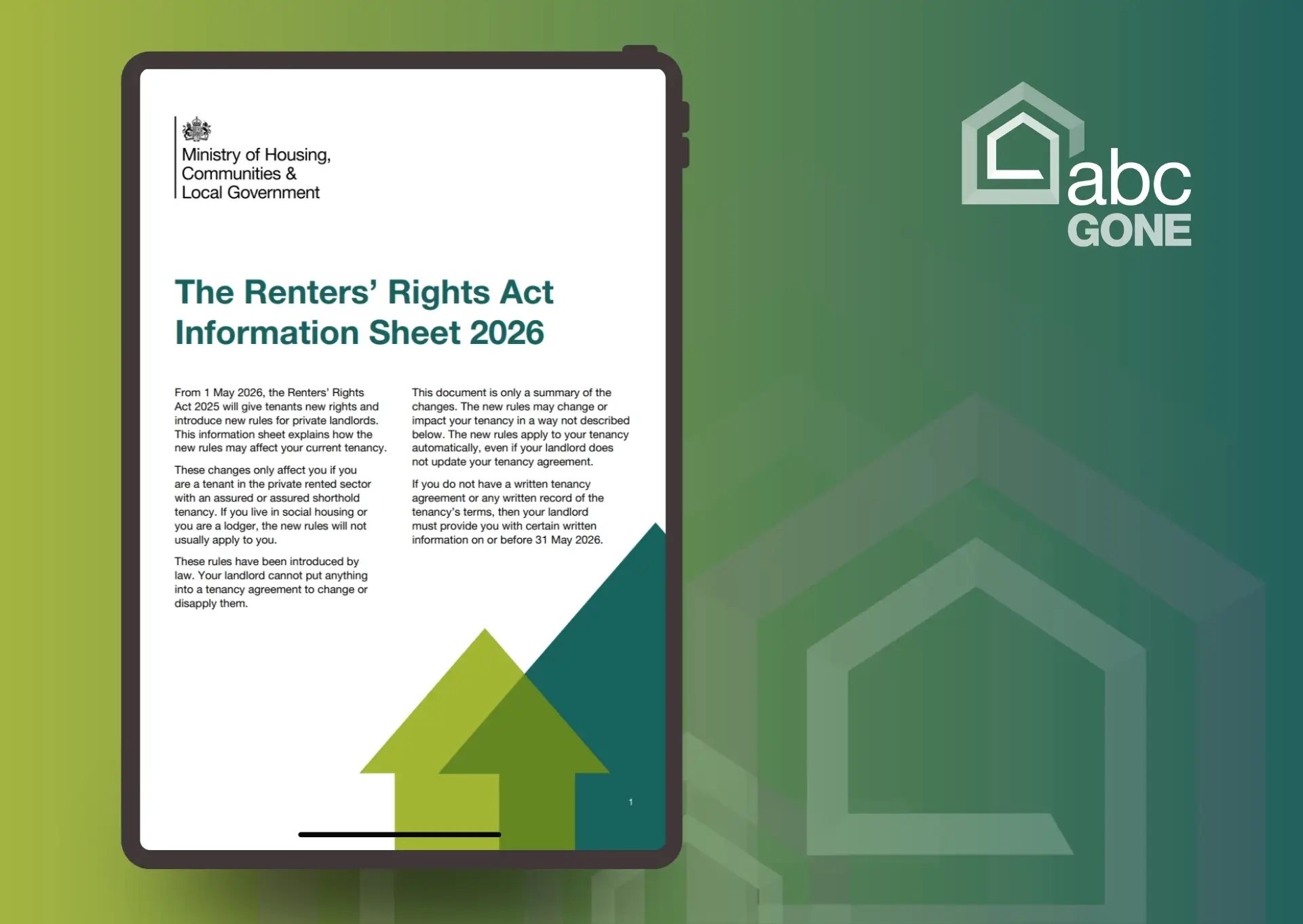
The Renters’ Rights Act Information Sheet 2026 is a government produced document for tenants. It explains how their tenancy may be affected by the changes introduced by the Renters’ Rights Act 2025. GOV.UK says landlords and letting agents must give this Information Sheet to tenants in certain existing tenancies.
The key deadline is 31 May 2026. If you are required to provide the Information Sheet and do not do so by that date, GOV.UK says you could be fined up to £7,000.
Who needs to receive the Information Sheet?
You must provide the Information Sheet if the tenancy:
- is an assured or assured shorthold tenancy
- was created before 1 May 2026
- has a wholly or partly written record of terms, such as a written tenancy agreement
A copy must be given to every tenant named on the tenancy agreement. You do not need to give it to lodgers.
If a letting agent manages the property for you, GOV.UK says the agent must provide the Information Sheet to the tenant, even if you have already provided it yourself.
How landlords must provide the Information Sheet
This is where landlords need to be careful. GOV.UK says the Information Sheet is only valid when downloaded from the official GOV.UK page, and you must give tenants the exact PDF from that page.
You can provide it in one of two ways:
- print a hard copy and post it or hand it to the tenant
- send the PDF electronically as an attachment, for example by email or text message
Do not just send a link to the PDF. GOV.UK says emailing or texting a link will not be valid.
Do landlords need to issue a new tenancy agreement?
For most existing written tenancies created before 1 May 2026, you do not need to change or reissue the tenancy agreement. Instead, you need to give the tenant the government produced Information Sheet by 31 May 2026.
If the tenancy is based entirely on a verbal agreement made before 1 May 2026, the rule is different. You cannot use the Information Sheet. Instead, you must provide written information about the key terms of the tenancy by 31 May 2026.
What about new tenancies from 1 May 2026?
For tenancies created on or after 1 May 2026, landlords must give tenants certain written information about the key terms of the tenancy before signing a tenancy agreement or otherwise agreeing the tenancy. This information can be included in a written tenancy agreement or provided separately.
That means landlords should review their tenancy agreement templates now, especially if they manage properties themselves.
What else changes from 1 May 2026?
The Information Sheet is only one part of the wider reform. From 1 May 2026, the first phase of the Renters’ Rights Act changes the tenancy system for private renting in England. GOV.UK says Section 21 “no fault” evictions will be abolished, most new and existing private rented tenancies will become assured periodic tenancies, and landlords will need a legally valid possession ground to evict a tenant.
Landlords should also prepare for changes around rent increases, rental bidding, rent in advance, pets, and discrimination against renters with children or those receiving benefits.
Rent increases: update your process
From 1 May 2026, landlords will only be able to increase rent once per year for assured periodic tenancies. You will need to use the correct process, including Form 4A, and give at least 2 months’ notice before the proposed increase starts.
Tenants will be able to challenge a proposed rent increase if they think it is above open market rent.
Rental adverts: show one clear asking rent
Rental bidding is being banned. From 1 May 2026, landlords and letting agents must include a specific rent price in written property adverts, and they will not be able to ask for, encourage, or accept offers above the advertised rent.
This applies to online adverts, printed adverts, social media posts, emails, texts, and direct messages.
Rent in advance: check what you ask for
The new rules also affect rent payments before a tenancy starts. GOV.UK guidance says landlords will only be able to ask for rent in advance after the tenancy agreement has been signed and before the tenancy starts. If the tenant pays monthly, the maximum will be 1 month’s rent. If they do not pay monthly, the maximum will be 28 days’ rent.
Holding deposits and tenancy deposits are separate, but landlords still need to follow the relevant rules, including using a government approved tenancy deposit protection scheme.
Pets: be ready to respond properly
From 1 May 2026, tenants will need to ask in writing if they want to keep a pet. Landlords will not be able to refuse without a fair reason, and each request must be considered on a case by case basis.
Landlords will usually have 28 days to respond in writing. If you need more information about the pet, you can ask for it, then you must respond within the required timeframe once the tenant replies.
Discrimination rules: review adverts and referencing
The Renters’ Rights Act also introduces new rules against rental discrimination. From 1 May 2026, landlords must not do anything that makes a tenant less likely to rent a property, or prevents them from renting it, because they have children or receive benefits.
This can include withholding information, stopping someone from viewing a property, or refusing to grant a tenancy. The rule also applies to people acting on your behalf, including letting agents and referencing services.
Quick landlord checklist
Before 31 May 2026:
- Download the official Information Sheet from GOV.UK
- Send the exact PDF as an attachment, or provide a printed copy
- Give it to every tenant named on the tenancy agreement
- Keep proof of when and how you provided it
- If the tenancy is verbal only, provide the required written tenancy information instead
- Review tenancy agreement templates for new tenancies from 1 May 2026
- Update rent increase processes
- Make sure adverts show one clear asking rent
- Remove any wording that suggests “no benefits” or “no children”
- Set up a clear process for written pet requests
- Check possession processes and make sure the correct grounds and notices are used
Why this matters for landlords
The Renters’ Rights Act is not just a paperwork change. It affects how landlords advertise, let, manage, increase rent, handle tenant requests, and regain possession.
For good landlords, the safest approach is to be organised. Keep records. Use the correct documents. Make sure tenants receive the right information on time. When in doubt, check GOV.UK or speak to a qualified adviser.
Need help keeping your rental property compliant?
ABC Gone helps landlords across London and Essex with property management, compliance coordination, routine inspections, maintenance handling, and Guaranteed Rent with no void periods. We keep the process clear, documented, and practical, so landlords can stay on top of changing rules without managing every detail themselves.
To discuss your property, contact ABC Gone:
Phone: 02085 530645
Email: info@abcgone.com
Address: 33 Station Road, Harold Wood, Romford RM3 0BS
FAQs
Yes, for certain existing assured or assured shorthold tenancies created before 1 May 2026 with a written or partly written record of terms. It must be provided by 31 May 2026.
No. GOV.UK says sending a link by email or text is not valid. You need to provide the PDF as an attachment or give a printed copy.
Yes. A copy must be given to every tenant named on the tenancy agreement.
If the tenancy is entirely verbal and was made before 1 May 2026, you cannot use the Information Sheet. You must provide written information about the key terms of the tenancy instead, by 31 May 2026.
For failure to provide required tenancy information, GOV.UK says landlords could face a fine of up to £7,000. Wider non-compliance under the new rules can lead to higher civil penalties in some cases.